Posts

Showing posts with the label Historical Drama

THE PINNACLE OF THE CHALUKYAN EMPIRE

Image
Many have extolled the economic progress, cultural refinements, scientific achievements and spiritual advances of ancient and medieval India. Historians concur that the glorious past was on an upswing during the rule of the Chalukyas in South India. Pulakeshi II, who lived in the 7 th Century CE, was the greatest monarch of the Badami Chalukya dynasty. He expanded the empire to encompass most parts of the Deccan in peninsular India during his reign. He lost his empire eventually to the Pallava sovereign, Narasimhavarman I. After ascending the throne, Pulakeshi II suppressed internal revolts and rebellions. He waged wars and defeated neighboring potentates and annexed their kingdoms― most notable of his victories were against the Ganga s of Talakadu; the Kadamba s of Banavasi; and, the Maurya s of Konkana.  The decimation of the Pallava emperor, Mahendravarman I in battle aside, Pulakeshi subjugated the rulers of Kalinga and Dakshina Kosala .   His conquest of Empe...

REVOLT TO ASSERT THE RIGHT TO RULE

Image
The Doctrine of Lapse was as devious a formula as it was ingenious devised for  the British to reclaim paramountcy and usurp direct control over subordinate princely states in pre-independence India. Under the ploy of regulating succession, the British annexed states of monarchs who died without natural heirs. Thus, the doctrine was aimed at regaining direct superintendence over states for imperial gain. “ ಕಿತ್ತೂರು ಚೆನ್ನಮ್ಮ ” (‘ Kitturu Chennamma’ ) is a 1961 Kannada film that featured the freedom struggle of the Queen of Kittur, who rebelled and defiantly went to war against the British in 1824 CE. The historical drama won several awards, including the National Award for Best Feature Film  in Kannada. As a commercial venture, the period flick attained great success; critics raved over it too. Rani Chennamma (B Saroja Devi) was trained in archery, fencing, horse riding and other martial arts at an early age. She married Raja Mallasarja (Dr. Rajkumar) in 1793 and begot a so...

AN ODE TO AGELESS ART AND ITS ARCHITECT

Image
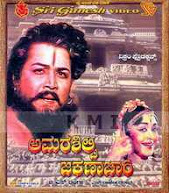
The Italian polymath, Leonardo da Vinci expressed very eloquently: " Beauty perishes in life, but is immortal in art.” Insightful words that resonate well with us all for sure!   “ ಅಮರಶಿಲ್ಪಿ ಜಕಣಾಚಾರಿ ” (‘ Amarashilpi Jakanachari’, which translates to ‘ Immortal Sculptor Jakanachari ’) is a  1963 Kannada  film on the life of an extraordinary sculptor, Jakanachari, who apparently lived in the 12 th Century CE and is credited with building several Kalyani Chalukya and Hoysala temples endowed with intricate carvings . The biopic was a popular success and was remade in T elugu  ( Amarashilpi Jakkanna ) . Born in a small village, Kaidala in Tumkur District of the State of Karnataka, Jakanachari (Kalyan Kumar) becomes a master artisan.   Shortly after his marriage, he leaves home to dedicate his life to art and sculpture. Deeply engrossed in his work, he abandons his pregnant wife, Manjari (B Saroja Devi). Despite encountering many obstacles, Jakanachari is u...

EMBODIMENT OF DEVOTION AND DETACHMENT

Image
It is said that ‘ asceticism ’ is not only about you owning nothing, but also about nothing owning you― a precept that is deep and profound in its philosophical content! Akka Mahadevi is a great ascetic from the 12 th Century CE, who rejected all material possessions and renounced worldly attachments. Belonging to the Lingayat sect, she is a prominent poet of Kannada literature and inspirational woman in the history of Karnataka. Her works include vachana s (literally ‘speech’), which represent a unique form of mystical and devotional poetry that chronicles pithily her experiences on the path towards Divinity and in the pursuit of enlightenment. Vachana s use simple, sincere language; but, they entail great intellectual rigor and philosophical fervor. “ ಶಿವಯೋಗಿ ಅಕ್ಕಮಹಾದೇವಿ ” (‘ Shivayogi Akkamahadevi ’) is a 1987 Kannada movie on the life of the great saint and literary giant, who opted for a path of spirituality during a time of political strife and social reform. The daughter ...

MOKSHA THROUGH DEVOTION TO GOD & DEDICATION AT WORK

Image
Sanatana Dharma is much more than plain vanilla faith; it is a belief system that gives one the liberty to connect with his Maker in his own personal way. It represents the diverse spiritual thought; rich cultural legacy; and, long civilizational history of India. Its sacred texts are a stockpile of ancient knowledge; a repository of timeless wisdom. The Bhakti Movement marks a phase during medieval times when many a saint adopted the path of devotion to the Supreme as a means for achieving moksha . Regimented ritualism was taboo for them. Sant Gora Kumbhar (also Goroba) was one such saint, who lived in Satyapuri village in Maharashtra State,  circa  1267 CE to 1317 CE. A contemporary of Namdev and a potter by profession, Goroba was ardently devoted to Lord Vithala.  “ ಭಕ್ತ ಕುಂಬಾರ ” (‘ Bhakta Kumbara’ ― it translates to: ‘(The) Devout Potter’) is a 1974 Kannada biographical film, which won awards by the dozen; the film which chronicles the life of the saint wa...

REAL DEVOTION IS UNBROKEN, UNCONDITIONAL SUBMISSION

Image
Sri Purandara D ā sa  (1484-1564) is an Indian poet and philosopher, a renowned composer and a fo unding exponent of South Indian classical ( Carnatic) music. Ardently devoted to Lord Vishnu (and his avatars) , the saint and social reformer is even revered as an  avat ā ra  (incarnation) of Sage N ā rada. Sri Purandara was a disciple of the seer, Sri Vyasatirtha , who was one of the main proponents of Dvaita philosophy and the rajaguru  (' state advisor ') in the Court of Sri Krishnadevaraaya during the Vijayanagar Empire. He wedded  bh ā va (mood or feel),  r ā ga (melody), and  laya (rhythm) in his compositions and mainstreamed classical music. The system of simplified music teaching that Sri Purandara conceived and popularised is in vogue even today. He incorporated aspects of daily routine and elements of colloquial expressions in his lyrics. He also composed  D ā sa S ā hitya , as a Bhakti Movement vocalist– the practice was e...

BEST OF HISTORY IN A FILM THAT CREATED HISTORY

Image
Abd-ar-Razzak , a Timurid scholar and chronicler and a scholar who visited the Vijaynagar Empire in circa 1443 CE as an ambassador of Shah Rukh, the Timurid dynasty ruler of Persia wrote about the capital city during the reign of Deva Raya II as: “ the pupil of the eye has never seen a place like it, and the ear of intelligence has never been informed that there existed anything to equal it in the world. It is built in such a manner that seven citadels and the same number of walls enclose each other.” Other scholars and explorers– the long list includes, the Turkish polymath, Katib-tchelebi ; the Italian travellers, Niccolo de Conti and Cesare Federici ; and, the Portuguese traders, Domingo Paes and Fernao Nunes – have rhapsodised about the magnificence of the empire and the enormity of weath therein. " ಶ್ರೀ ಕೃಷ್ಣ ದೇವರಾಯ "  (' Sri Krishnadevaraya ') is a1970, award-winning and critically hailed Kannada film. Oh, the blockbuster biopic went gangbusters at th...